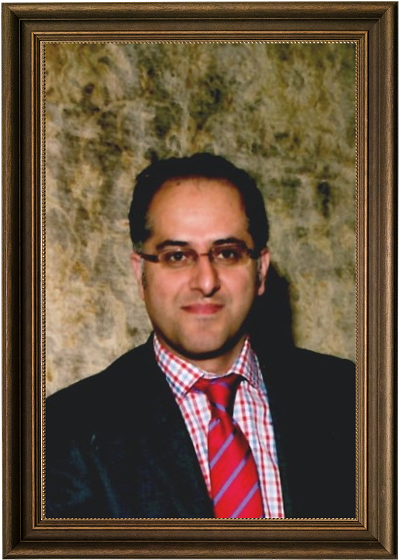
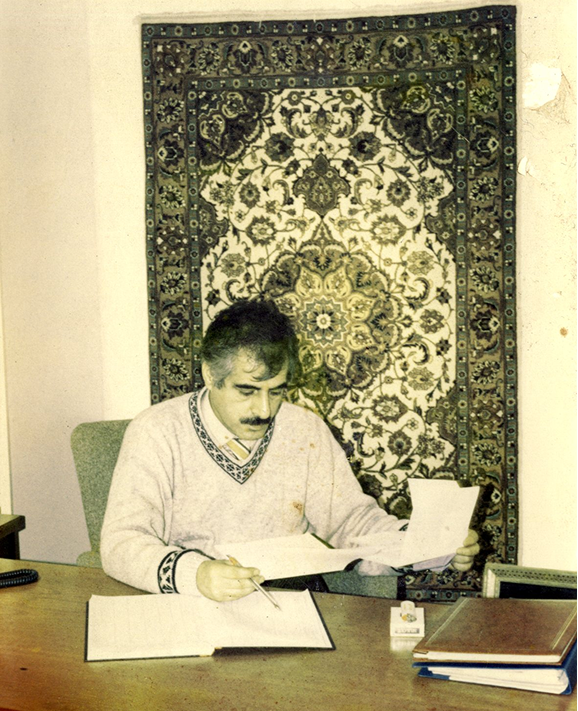
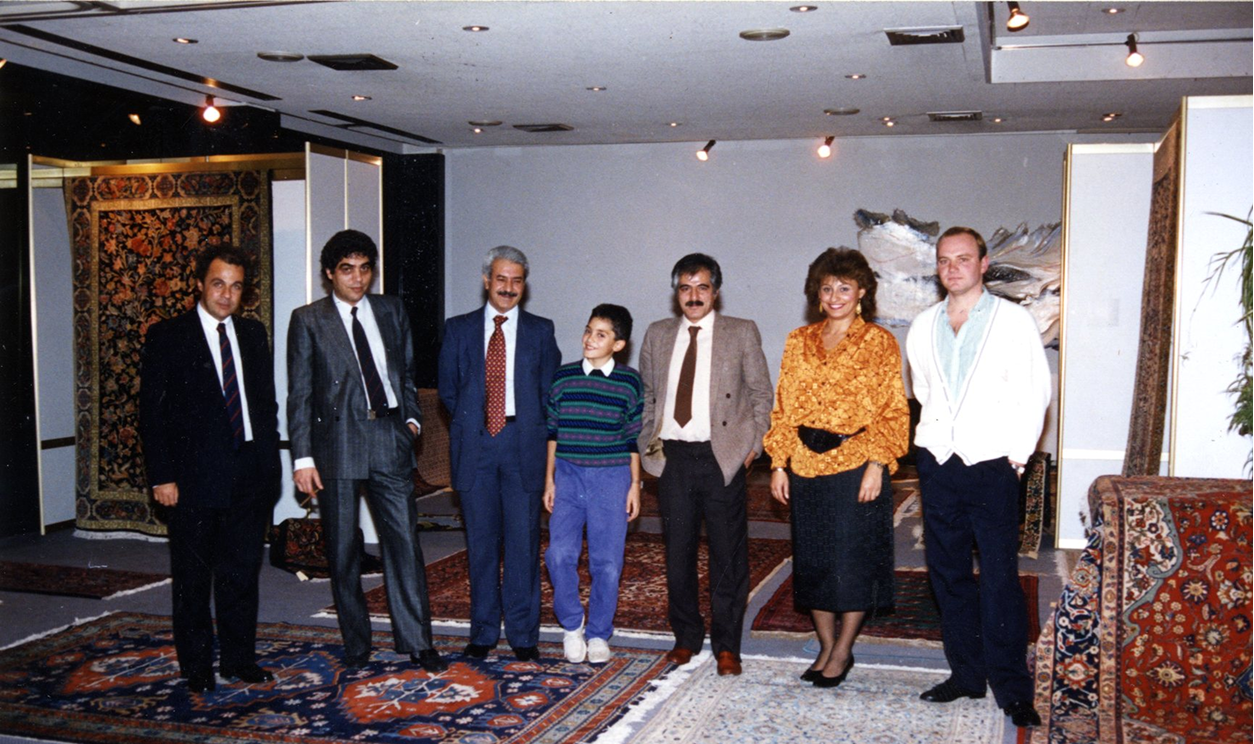
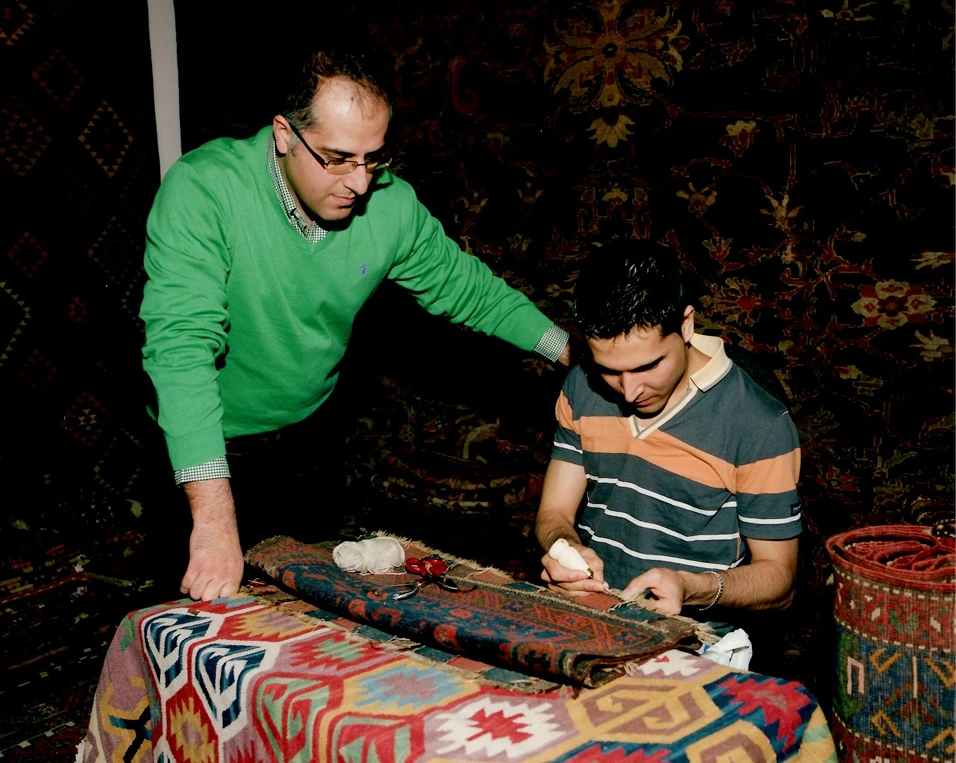
My journey into the world of antique rugs began in 1986, when I was still a young man working alongside my father in the vibrant city of Nicosia. That year marked the opening of one of the city’s leading rug galleries—his vision, but one that would come to shape the course of my life. The gallery, rooted in the traditions of Persian weaving, focused on fine carpets, kilims, and rugs from all corners of Iran, accompanied by a modest yet meticulous workshop for their restoration.
A Personal Journey Through the World of Antique Rugs and Cultural Memory
From the very beginning, I was drawn not only to the artistry and technique behind each piece, but to the silent histories they carried. My growing love for rugs was entwined with a much deeper intellectual passion: the ancient and medieval history of Greater Iran—a civilisation whose spirit lives on in the warp and weft of its cultural artefacts.
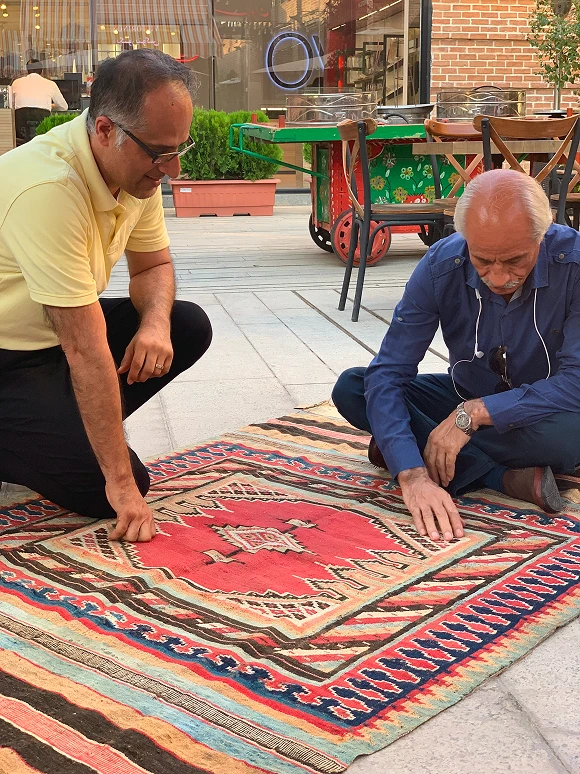
In 1989, my father chose to expand his horizons, relocating the business to England, where he opened new galleries in Southampton and Romsey. In addition to our Persian collection, we began curating antique Caucasian rugs and kilims, with a particular emphasis on pieces from Azerbaijan, Georgia, and Armenia. For us, this was more than an aesthetic decision. My family are Iranians who were expelled from Baku during the Soviet era—so these weavings represented not only beauty and craftsmanship, but a reconnection with an ancestral thread unjustly severed. Over time, I developed a personal affinity for certain styles and regions. I am especially drawn to the refined geometry of Shirvan, the bold colours of Kazak, the poetic charm of Ganjeh, and the lyrical floral work of Sarough. These pieces resonate with me deeply—not only as a dealer, but as a student of their cultural language.
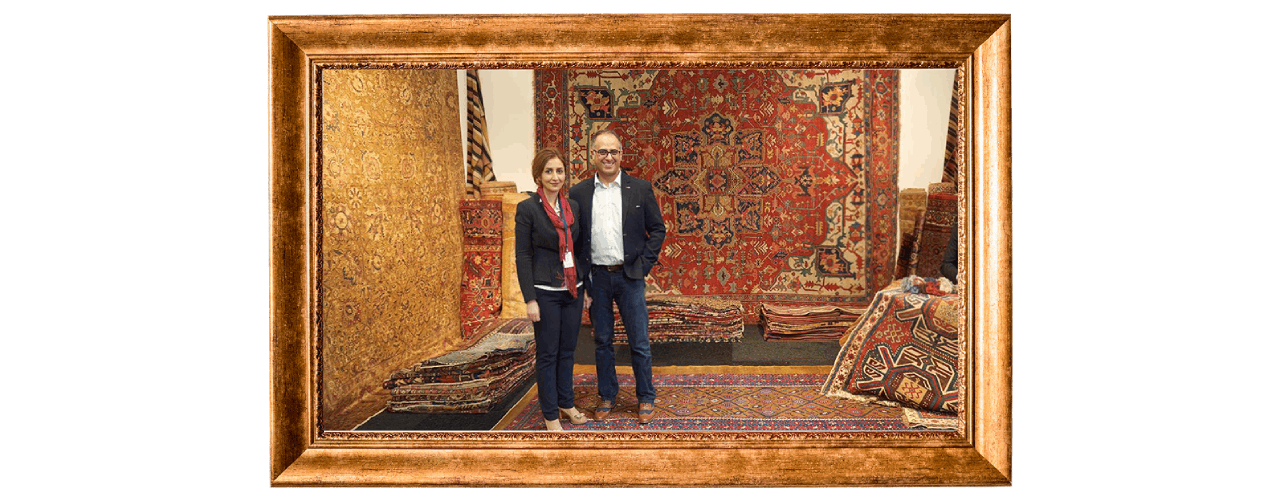
As our journey evolved, my wife Maryam and I channelled our shared passion and deep expertise into building our new business and gallery entirely of our own making. Drawing from both our experience and knowledge of Persian and tribal rug traditions, art history, and design—as well as her extraordinary years of academic and curatorial experience—we established a distinctive vision that reflects our independent values and commitment. Relying solely on our own skills, dedication, and perseverance, we grew the business and gallery from the ground up, expanding its curatorial soul through rare, meaningful pieces that speak to both artistic integrity and cultural depth. As well as a comprehensive professional restoration workshop in the field. In addition, we manage one of the most respected and accomplished rug restoration workshops in the United Kingdom and Europe. Our workshop today stands as a testament to time-honoured techniques, professional mastery, and a reverence for the textile arts that few in this field still uphold. My understanding of rugs goes beyond surface and structure; it is an immersion into a civilisational continuum that stretches from the steppes of Western China and Turkestan to the furthest western provinces of Iran, and from the sunburnt south of Persia to the frostbitten edges of Siberia—where the ancient Pazyryk carpet was unearthed, still whispering of ancestral hands. Across this vast geography, one encounters not fragmentation, but resonance: a shared symbolic grammar, a unity of aesthetic soul. These carpets are not merely artefacts of utility or trade—they are verses woven in wool and dyed in meaning. Their spirit echoes in the quatrains of Khayyám, the mystic fire of Rumi, the lyric grace of Hafez, and the epic clarity of Nezami Ganjavi. To walk upon such a rug is, in truth, to walk through the poetic memory of a people who understood beauty as a form of philosophy, and pattern as a mirror of the divine.
As a Lecturer and Cultural Advocate
Beyond the world of commerce, my passion for antique rugs and their historical context has led me to share my knowledge with a wider audience. Over the years, I have been invited to speak at various cultural and academic institutions across England. A particular honour was being invited to the British Museum in March 2011, where I delivered a lecture on the tradition of antique rugs from Greater Iran—encompassing not only modern-day Iran, but also Afghanistan, which shares with it a continuous cultural and artistic heritage. In these talks, I endeavour to convey the truth that rugs are not merely decorative objects, but repositories of civilisational memory. Each piece speaks in the language of its people, its place, and its time. As Director of A&M Rugs Ltd, trading as Pars Rug Gallery, I remain devoted not only to the preservation of these rare and noble artefacts, but to the broader mission of cultural remembrance, continuity, and reverence.